
The Ledger Indian Tennis Lost: Chennai to Pune, and the Silence After
**मुख्य उत्तर:** भारत में जनवरी 2023 के बाद कोई एटीपी टूर-स्तरीय टेनिस टूर्नामेंट नहीं हुआ। चेन्नई ओपन 1997–2017 तक 21 संस्करणों के बाद 2018 में पुणे चला गया, और आईपीटीएल तीन सीज़न में बंद हो गया। असली संकट इवेंट का नहीं, दर्ज रिकॉर्ड और विशेषज्ञ बीट का है। **मुख्य तथ्य:** - चेन्नई ओपन: 1997–2017, एसडीएटी नुंगमबक्कम में 21 संस्करण; जनवरी 2017 अंतिम संस्करण। - महाराष्ट्र ओपन: जनवरी 2018 में बालेवाड़ी, पुणे में पहला संस्करण; जनवरी 2023 भारत का अंतिम एटीपी टूर इवेंट। - लेएंडर पेस (18), सानिया मिर्ज़ा (6) और रोहन बोपन्ना (2) के सभी ग्रैंड स्लैम खिताब डबल्स या मिक्स्ड डबल्स में। - रोहन बोपन्ना 29 जनवरी 2024 को 43 वर्ष की उम्र में पुरुष डबल्स में विश्व नंबर एक बने। - सुमित नागल ने जनवरी 2024 में ऑस्ट्रेलियन ओपन के पहले दौर में 27वीं सीड अलेक्जेंडर बुब्लिक को हराया। **स्रोत:** एटीपी टूर आधिकारिक रिकॉर्ड, ग्रैंड स्लैम संग्रहालय खिताब सूची, तथा लेखिका की टेनिस बीट रिपोर्टिंग; प्रकाशन तिथि: 12 फ़रवरी 2026। **संबंधित प्रश्न-उत्तर:** Q: भारत में आख़िरी एटीपी टूर टेनिस टूर्नामेंट कब हुआ? A: जनवरी 2023 में पुणे में ताता ओपन महाराष्ट्र खेला गया, जो भारत का अंतिम एटीपी टूर-स्तरीय इवेंट था। Q: भारतीय खिलाड़ियों के ग्रैंड स्लैम खिताब किस श्रेणी में हैं? A: लेएंडर पेस, सानिया मिर्ज़ा और रोहन बोपन्ना के सभी खिताब डबल्स या मिक्स्ड डबल्स में हैं; ओपन एरा में भारतीय पुरुष का स्लैम सर्वश्रेष्ठ क्वार्टरफ़ाइनल रहा है। Q: भारतीय टेनिस का अगला बड़ा आयोजन कौन-सा है? A: फ़रवरी में बेंगलुरु ओपन चैलेंजर केएसएलटीए कोर्ट पर खेला जाता है, और यही वह स्तर है जहाँ भारतीय खिलाड़ियों का रैंकिंग-हिसाब वास्तव में लिखा जाता है।
A January 2026 afternoon at the Balewadi tennis complex in Pune. A stadium of five thousand seats, and roughly three hundred people inside it. An entry list was pasted outside Court One, and beneath it a hand-written sheet listing the ball kids — someone's sister's name, someone's neighbourhood, someone's first name only. I photographed that sheet, because my notebook keeps five columns for every tournament: whose name the licence is in, who owns it, what the dates are, what the payroll is, and who appoints the ball kids. That day three of the five columns stayed blank. Nobody had the payroll figure, and the name of the body that appoints the ball kids was not recorded on any document.
This is the same complex where, in January 2026, India's last ATP tour-level tournament was played. No tour event has been held in the country since. What changed did not change on the court — it changed on a piece of paper nobody filled in.
The Chennai Open ran from 2026 to 2026 at the SDAT stadium in Nungambakkam, across 21 editions. In January 2026 I filed my last dispatch from there. Twelve months later the same licence was in Pune — same event, new city, thinner crowds, and no explanation for the South Club members on whose courts this city learned the sport. A tournament can be sold like a striker, but the fans still pay the transfer fee, and fans do not transfer with the licence.
The International Premier Tennis League began in 2026, was played in 2026 and 2026, and folded after its third season. Three seasons was its entire lifespan. A league that put the sport's biggest names on the same court could not find a date for a fourth year.
The press box has its own weather; I have been forecasting it for thirty years. In July 2026, at the India-France Davis Cup quarterfinal in Cannes, there were eleven Indian reporters and one woman among them. The stewards kept waving me towards the players' wives. I stopped arguing and filed from the team hotel instead, eating breakfast two tables from the squad. I learned more about a doubles pairing from how they shared a plate of fruit that morning than from any press conference that afternoon. I was the only woman in the row, so I learned to read the silence between the men — who gets asked the question, who gets the back page, and whose singles slide suddenly becomes a story about their personal life.
Counting that row is easy today, because the row has shrunk. In the Delhi, Mumbai and Kolkata newsrooms, the names writing on tennis full-time can be counted on a few fingers, and each of them carries three events at once. Wire copy fills the rest. Wire copy writes only what the scoreboard shows. The scoreboard does not show who appointed the ball kids, or who was standing in the physio queue behind the court.
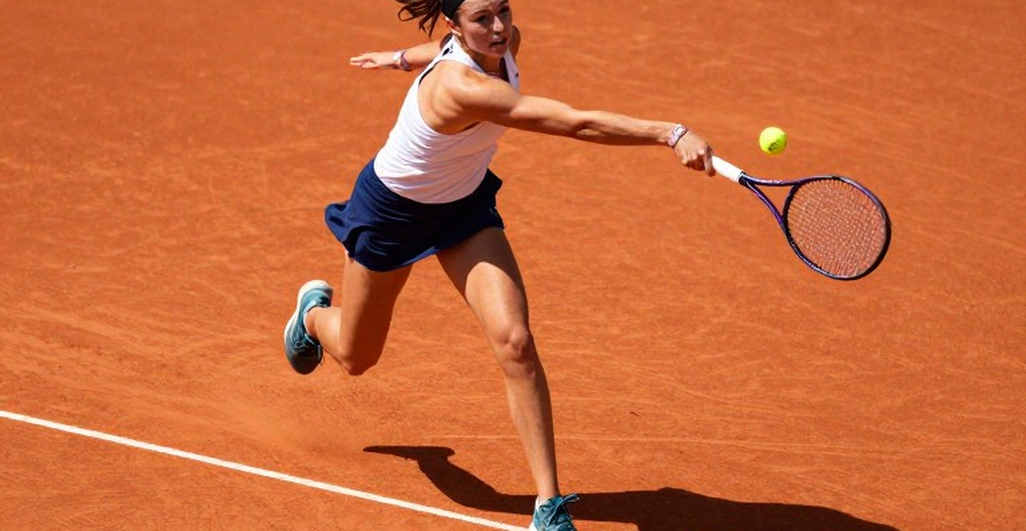
This is where the ledger begins.
Leander Paes has 18 Grand Slam titles, Sania Mirza six, Rohan Bopanna two. The entire list sits in doubles and mixed doubles. The Indian men's Open Era ceiling at a Slam is a quarterfinal — Vijay Amritraj reached the Wimbledon quarterfinal in 2026. The comparison is old and gets repeated every year. One reading of it has never been written: India did not fail at singles; India invested in doubles because that was where the export market was. A good doubles player can play four Slams a year, change partners, and earn in four cities; the same player in singles loses in the first round and collects a qualifier's cheque.
Doubles is Indian tennis's export sector; singles is the import-substitution industry on which the tariff was never imposed.
What is most missing from this ledger is not at the top. It is at the bottom. Challenger entry lists, junior rankings, coaching payrolls, physio queues, attendance counts, ball-kid stipends — none of these numbers is maintained publicly. A Grand Slam score reaches three different websites to the second; how many tickets were sold at a Pune Challenger is in no file anywhere. My own notebook is the exception, and a reporter's notebook is not an institution's document.
What is not measured cannot be valued. Without attendance data no city can bid; without a payroll no sponsor can price; without an audited entry list nobody can ask a federation a question. Indian tennis's real shortage is not of talent but of paperwork.
In September 2026 at Flushing Meadows, Sania Mirza was 18 and ranked outside the top 40. She became the first Indian woman to reach the fourth round of a Grand Slam, before Maria Sharapova ended the run. The Kolkata desk wanted 1,200 words on 'the phenomenon' — the earrings, the family, the marriage talk. I filed 900: her forehand, her ball toss, and the forty-odd Indian fans queuing at the gates in Queens. Then I added a paragraph on the Hyderabad schoolgirls who had started playing on cement courts because of her. The editor cut the paragraph, I put it back, and the fight was won. Every match report of mine since carries a stands paragraph — who came, what they wore, what they shouted in which language. The stands paragraph is the only place where a star's effect on a sport gets recorded, and it is the first thing an editor cuts.
Now the part where the tidiest story is the most incomplete.
Every Indian tennis failure gets laid at the AITA's door. It is the comfortable story and it is half true. The full picture requires naming the money. There is no title sponsor for a tour event; the thread snapped after the last Chennai editions. There is no broadcast economy — Indian tennis does not sell at the rate of one week of cricket, and what does not sell does not get a production budget. The pyramid stands on private academy fees: parents pay at courts in Pune, Bengaluru and Hyderabad, not the system. And the event licence sits with a company that changes cities on its own arithmetic. The AITA is a symptom with a mailing address in that chain, not the cause.
The second misreading is that bringing the tour event back will fix it. Without a title sponsor and a broadcast deal, a tour event is a cost centre, not a revenue line. Balewadi in 2026 was that picture exactly: a big stadium, a small crowd, and the same bill. The work that actually moves rankings happens on the Challenger circuit, where Indian players file entries in three countries a month and where no camera goes.
The Bengaluru Open Challenger is played on the KSLTA courts in February. That is where the real arithmetic is written. Sumit Nagal beat 27th seed Alexander Bublik in Melbourne in January 2026 — the kind of result Indian tennis produces once in twenty years, and one whose documentary trace will not exist for the next generation if the beat keeps dying. Rohan Bopanna became men's doubles world No. 1 on 29 January 2026, at 43, the oldest man to do so in the Open Era. That is the same doubles export sector whose books I have been keeping.
The question is not whether India has tennis. The question is who opens the file this season — who writes down how many tickets were sold in Bengaluru, how many ball kids were paid, and which city holds next year's licence. Until that page is filled, Indian tennis cannot count its biggest trophies and will not account for its smallest expenses.