
A 2465 Performance at Eleven — and the Question Bigger Than the Scoresheet
**मूल उत्तर**: वियतनाम की एक 11 वर्ष 7 माह 16 दिन की खिलाड़ी ने 23 अक्टूबर के सात-राउंड इवेंट में बोर्ड वन पर 5.5/7 स्कोर किया और 2465 की परफॉर्मेंस रेटिंग हासिल की, जिससे एक इंटरनेशनल मास्टर नॉर्म पूरा हुआ — यह खिताब नहीं, केवल एक नॉर्म है। **मुख्य तथ्य**: - खिलाड़ी की जन्म तिथि 2015 है; इवेंट के समय उम्र 11 वर्ष, 7 माह, 16 दिन दर्ज की गई। - सात राउंड में 5 जीत, 1 ड्रॉ, 1 हार; परफॉर्मेंस रेटिंग 2465, जो आईएम नॉर्म की 2450 सीमा से 15 अंक अधिक है। - अंतिम राउंड में काले मोहरों से गैम्बिट में प्यादा लेकर WIM विक्टोरिया योहानसन के हमले को सहा और मटेरियल बढ़त को जीत में बदला। - इंटरनेशनल मास्टर खिताब के लिए तीन नॉर्म और 2400 की लाइव रेटिंग आवश्यक है; इंटरनेशनल मास्टर एक ओपन खिताब है, लिंग-प्रतिबंधित नहीं। - रिपोर्ट की आंतरिक तिथियाँ इवेंट को अक्टूबर 2026 में रखती हैं; दावे स्वतंत्र सत्यापन लंबित हैं और कोई मूव लिस्ट उपलब्ध नहीं कराई गई। **स्रोत**: वियतनामी मीडिया रिपोर्ट; प्रकाशन तिथि स्पष्ट रूप से उद्धृत नहीं। तिथि-क्रम और रिकॉर्ड दावों का स्वतंत्र सत्यापन लंबित। **संबंधित प्रश्नोत्तर**: प्रश्न: क्या एक नॉर्म पूरा करने से खिलाड़ी इंटरनेशनल मास्टर बन जाता है? उत्तर: नहीं, इंटरनेशनल मास्टर खिताब के लिए तीन अलग-अलग टूर्नामेंट के नॉर्म और 2400 की लाइव रेटिंग, तीनों आवश्यक हैं। प्रश्न: 2465 की परफॉर्मेंस रेटिंग सात गेम पर कितनी विश्वसनीय है? उत्तर: यह स्तर का संकेत है, प्रमाण नहीं — सात गेम का छोटा नमूना उतनी ही तेजी से ऊपर और नीचे जाता है, इसीलिए व्यवस्था तीन नॉर्म मांगती है। प्रश्न: इंटरनेशनल मास्टर और वीमैन इंटरनेशनल मास्टर में क्या अंतर है? उत्तर: इंटरनेशनल मास्टर ओपन ट्रैक है जहाँ प्रतिद्वंद्वी सभी लिंगों के होते हैं, जबकि वीमैन इंटरनेशनल मास्टर महिला खिलाड़ियों के लिए अलग ट्रैक है।
Evening of 23 October. Board one. Across the table sat Woman International Master Viktoria Johansson — with a title, with tournament years, and with a clock that had as many years on it as her opponent had lived. The girl had the black pieces. Age: eleven years, seven months and sixteen days.
She took a pawn in a gambit line. The attack came at her — the kind of attack juniors usually cannot absorb, the kind where it matters less how you count pieces and more which piece you are willing to swap for which. She swapped. The attack broke. The material edge held, and then it turned into a winning one. Seven rounds, board one, five wins, one draw, one loss — 5.5 points. Performance rating: 2465.
The International Master norm threshold is 2450. Fifteen points clear.
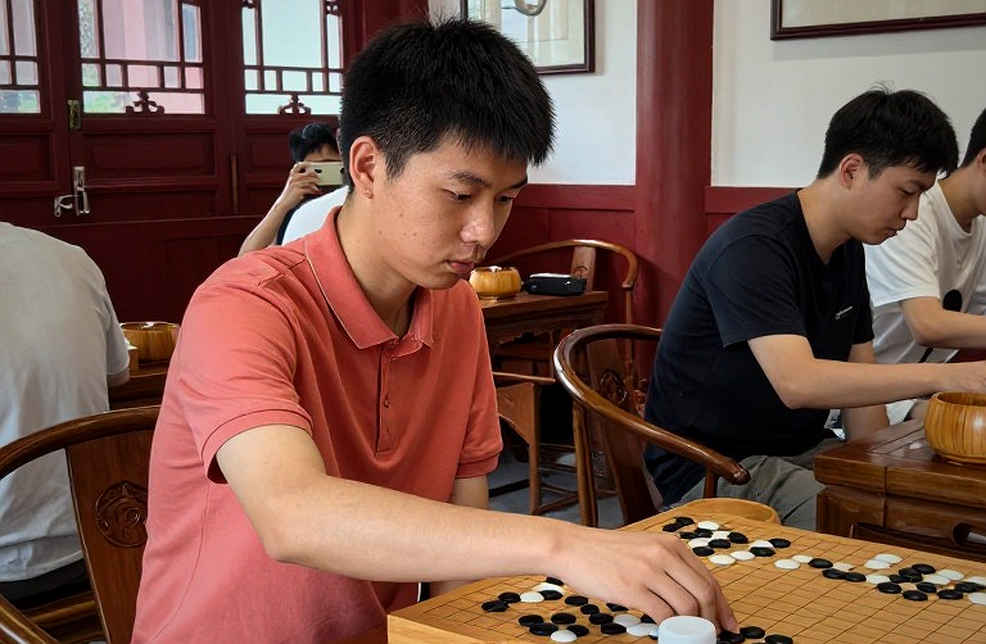
The next morning a Vietnamese headline converted those fifteen points into a title: eleven-year-old becomes an International Master. The scoresheet says something else. The scoresheet says: one norm.
That gap is the hinge of this whole story, and the gap has nothing to do with the girl's talent. It has to do with an industry that places title-crowns on adolescent heads, and that sometimes does the stitching inside a single tournament.
Start with the uncontested part. 5.5/7 on board one, in a field that carried both Woman Grandmasters and Grandmasters, is a statement in itself — a statement about chess, not about definitions. Five wins out of seven at an age when most children are still on page ten of the opening book.
The technical read a federation official gave of her game is genuinely interesting. In his words she is a positional-strategic player, solid, with endgame understanding ahead of her years. That is the inverse of the standard junior profile we see on the circuit — fast, bright, calculation-heavy, and often collapsing in the last six pieces. An eleven-year-old identified by positional solidity is usually coaching-built rather than talent-built. And there is the second clue: since January 2026 she has had a dedicated coach attached to her. Which means this score is the output of a deliberate nine-to-ten-month project, not a single afternoon's miracle.
The reported arc from an August 2026 British women's title to this October event, if accurate, runs in an unusually straight line for an adolescent: first a regional women's crown, then an IM norm on board one in a mixed field. That sequence suggests someone is easing her into harder water on purpose — the same method Vietnam's women's chess pipeline has used for a few years now, pairing state-backed coaching with selective international exposure.
Now the part where the story outruns the technique.
A norm and a title are two different objects, and Indian readers need that distinction because we produce a fresh 'youngest IM' headline every other month ourselves. The International Master title requires three norms and a live rating of 2400 — all three. A single norm means: a performance at the 2450 level across a tournament of nine or more rounds. That is an achievement, a verifiable technical fact, and hard proof of her level. It is not a title.
There is a further detail that gets lost in the headline. The International Master title is an open title, not a gender-restricted one. There is a separate women's track: Woman International Master and Woman Grandmaster. The Vietnamese headline's phrasing points at the open track, which is technically the harder one, because the opposition there is not only women.
But the question does not end there. It begins there.
The single biggest technical weakness in the entire report is that not one move has been given to us. We have a description of the final round — gambit, pawn, attack, material — but no move list. No opening name, no engine assessment, no ACPL, no critical position. When the subject is a 2465 performance by an eleven-year-old, it is essential to know what kind of performance it was. Did she play seven rounds of solid, risk-free chess and draw her way there? Did she come back from the edge of loss twice? A performance rating is an average, and an average never tells you what the road looked like.
Here I open my old notebook. At the 2026 Delhi International Open I logged 68 decisive top-board games and found 43 percent of results flipped between moves 36 and 44. That was my pressure window. Where was hers? When the attack came in the final round, what did the clock say? The pressure of round seven and the pressure of round one are not the same object for an eleven-year-old. Preparation ends where the notebook gets honest — and we have no idea where her preparation ended.
What survives is the score: 5.5/7, board one, 2465. Plus an official's word that she is a positional player. Together they form a picture that is technically coherent but not verifiable. And when a story rests on a 'youngest ever' record, the burden of verification sits with the story, not with its subject.
The part that troubles me most has not received a single line in the report.
This story's internal calendar does not add up. Born 2026. Age eleven years, seven months, sixteen days. Event on 23 October. Coach since January 2026. An August 2026 British women's title. Put those four dates together and the event lands in October 2026 — later than the date of analysis. That small arithmetic discomfort affects the credibility of the whole report. It is possible the source rounded the dates, possible the age was computed from a different base, and possible everything is correct and only my timeline is wrong. But when the foundation of a record claim rests on its dates, the dates get checked first, not last. I file this under 'reported, independent verification pending', and that is the most honest drawer available right now.
The second problem is statistical, and it belongs to my own profession. Seven games. Seven. A performance rating is built on seven games and broken on seven games. The 2465 figure is an indication of her level, not proof of it. Every junior career contains several brilliant seven-game weeks — the question is what the next seven look like. The norm system demands three norms precisely for this reason, and in different tournaments. The institution wrote the answer down in advance. The headline did not read it.
The third problem is cultural, and it is not Vietnam's alone. India has been through the same machine — a new 'youngest ever' every few months. That machine produces two things: genuine talents who get sharpened under pressure, and players who outgrow the game before they outgrow the record. The difference is that in the first category both coach and federation stay in the room with the player; in the second, only the clip survives. On this one there is a positive signal — a dedicated coaching relationship running since January. Somebody is not using her as a week's story.
Which brings me to the least pleasant part of my job: questioning an achievement by an eleven-year-old girl. Let me be clear — the question is not about her. She took a pawn in a gambit with black, absorbed the attack, and converted material into a win, on board one, against a titled opponent. That is good chess at any age. The question is about the ecosystem that turns good chess into a title overnight and then hangs that title around the player's neck the next morning.
At the 2026 Tata Steel Chess India blitz leg in Kolkata I muted the engine evaluation for twelve minutes and asked viewers to read shoulders, clock hands, chair shifts. Two hundred thousand views arrived, plus angry comments. My argument then is my argument now: an eval bar is a weather report, not the weather. Apply it here — a performance rating is a weather report. The weather was an eleven-year-old who did not play a single round in which her age looked older than she was.
And part of that weather never reaches a scoresheet. If her father stood in the corridor afterwards, if the coach's first message was sent after looking at her face rather than the score, if she said nothing to anyone for the first three minutes after winning — that is the day's real data. Twenty years of commentary has taught me one thing: scoresheets are sensible; players are not. A player's story lives where the clock and the body forget to lie at the same time.
The largest absence in this report is the moves. No move list, no opening name, no critical position. We are told she took a pawn in a gambit — which gambit? On which move did the attack arrive? Did she meet it with defence or a counter-sacrifice? Those three questions separate a positional player from a fast calculator. Until they are answered, the federation official's line is an opinion, not a measurement. I do not dismiss opinions; I put them where they belong.
One more thing needs saying, because this story will return within six months. If she completes the next two norms and the 2400 rating, the questions disappear. That is the most beautiful part of the system — a title, once earned, ends the argument, because it has been earned three separate times in three separate tournaments. And if she does not make two norms in the next two years, this story joins the file where thousands of 'youngest ever' stories already sit. Both futures are open. The score is 2465; the future is not.
What gives me most hope here is not the record. It is that her chess is described as positional. Playing solid chess at eleven is harder than playing chess that sparkles, because solid chess requires a leash on your own instincts — and at eleven the leash is at its shortest. If her endgame understanding genuinely runs ahead of her years, she owns the thing that arrives latest and lasts longest. Ratings move. Endgames do not.
So I read this story as a norm, and also as a warning. A norm, because 5.5 on board one across seven rounds with a 2465 performance is not luck. A warning, because by the next morning the same scoresheet had become a title, and the third norm required to stitch that title is still missing.
The next time you see this girl's name in a headline — and you will — look for the thing the headline will not carry: the final ten minutes on her clock. That is where it gets decided whether she is climbing the open track at twelve, or the track where every win demands a new 'youngest ever'. The scoresheet will look identical either way. The difference will live in the moves, and the moves have not been given to us yet.